
CARNE ANDALUCÍAHALAL MEAT · MÁLAGA
Request an offer
ProductsWholesaleHotels & cateringHalal & qualityGuidesFAQAboutContactHalal beefHalal lambHalal vealHalal poultryFrozen halal meatMinced & processedRequest an offer
ENESDE
  1. Home
  2. Guides
  3. Halal lamb for Eid and Ramadan: a planning guide for butchers and wholesalers
Guide · Eid & Ramadan · 8 min read

Halal lamb for Eid and Ramadan: a planning guide for butchers and wholesalers

How butchers, wholesalers, restaurants and caterers plan halal lamb for Ramadan and Eid al-Adha: demand peaks, early pre-orders, whole lambs or cuts, carcass weight, fresh or frozen, and the cold storage you need on the busiest days.

In brief

Ramadan and Eid al-Adha follow the lunar calendar and move about 11 days earlier each year, so plan with a date window and pre-order early.

Buying halal lamb wholesale is a commercial purchase, not an udhiyah; questions about the qurbani belong with the imam or community.

In the EU, slaughter for Eid must take place in an approved slaughterhouse; home slaughter is not an option for any business.

Specify whole lamb or cuts, a carcass weight range, fresh or frozen and the certificate standard, and match deliveries to your cold storage.

When should you order halal lamb for Eid al-Adha and Ramadan?

Order as early as your supplier's planning allows, ideally several weeks before the expected date, because demand for halal lamb peaks in many markets at the same time. Both festivals follow the Islamic lunar calendar and move about 11 days earlier each year.

Ramadan and Eid al-Adha have no fixed Gregorian dates. The Islamic calendar is lunar, so each festival comes roughly 11 days earlier than in the previous year, and the exact day often depends on the sighting of the new crescent moon. Plan with an expected window rather than a single date, and confirm the final day with your community.

For a butcher, wholesaler or restaurant, this means a planning calendar that works backwards from the festival:

  • Estimate: derive volumes from last year's sales and the pre-orders your own customers have already placed.
  • Request: send your specification (whole lambs or cuts, carcass weight range, fresh or frozen, certificate standard) so the supplier can check availability.
  • Confirm: fix quantities, delivery days and documents in writing; price, origin and slaughterhouse are stated in the offer.
  • Deliver: stagger deliveries where possible so your cold room is not overloaded on a single day.

Lead times are not the same every year. They depend on the season, the number of lambs available, slaughterhouse capacity and transport. Ask for the lead time in the offer instead of relying on last year's experience, and keep a reserve plan for late orders from your customers.
Is buying halal lamb wholesale for Eid the same as an udhiyah (qurbani)?

No. Buying halal lamb from a wholesaler is a commercial purchase, while the udhiyah or qurbani is an act of worship with its own conditions. Whether a particular arrangement fulfils the udhiyah is a question for your imam or community.

The udhiyah, also called qurbani or kurban, is the sacrifice associated with Eid al-Adha. Islamic scholarship sets conditions for it that go beyond halal slaughter. Among the points scholars discuss are:

  • the permitted species of animal and a minimum age;
  • the time window, which begins after the Eid prayer;
  • the intention (niyya) of the person making the sacrifice;
  • who slaughters, or who is appointed to slaughter on someone's behalf;
  • how the meat is shared and distributed.

Schools of law and scholars differ on details, and we do not issue religious rulings. What we can say clearly: halal lamb from our wholesale range is certified meat for the trade. It is not an udhiyah carried out on behalf of a buyer or of the buyer's customers.

If your shop, association or mosque organises qurbani for others, clarify the religious requirements with your imam or community first and the legal requirements with your local veterinary authority. Then tell us exactly what you need, so the offer does not promise anything that cannot be documented.

Where may lambs be slaughtered for Eid al-Adha in the EU?

Slaughter according to religious rites without prior stunning is only permitted in a slaughterhouse, and this also applies during Eid al-Adha (Regulation (EC) No 1099/2009, Article 4(4)). Slaughter at home is not an option for butchers, wholesalers or restaurants.

Regulation (EC) No 1099/2009 on the protection of animals at the time of killing generally requires stunning. Article 4(4) allows an exception for methods of slaughter prescribed by religious rites, provided the slaughter takes place in a slaughterhouse. Member States may adopt stricter national rules, and several have done so. In 2018 the Court of Justice of the EU confirmed that ritual slaughter during the festival must also take place in approved slaughterhouses (Case C-426/16).

The regulation contains separate rules for animals slaughtered outside a slaughterhouse for private domestic consumption. Those rules concern private households only. A business that sells or serves meat must source it from establishments approved under Regulation (EC) No 853/2004, with a health mark and full traceability.

  • Check the approval number of the slaughterhouse in the health mark.
  • Check that the halal certificate names the same establishment.
  • Keep the documents with each delivery for official controls.

The full texts are on EUR-Lex: Regulation (EC) No 1099/2009 and Regulation (EC) No 853/2004.

Whole lamb halal or cuts: what should you buy for Eid?

Whole lambs suit butchers with the skills, space and customers for full carcass cutting. Cuts suit restaurants, caterers and shops that need specific parts in predictable quantities, and many buyers combine both.

The right choice depends less on the festival than on your business. A useful way to decide is to look at who buys from you and what they ask for.

  • Whole lambs (whole carcasses): many families ask for a whole or half lamb for Eid, often cut to order. You need a butcher who can break down carcasses, rail space in the cold room and a way to sell every part, including neck, breast and trimmings.
  • Halves and quarters: a middle way for smaller shops that want to offer "half a lamb" without storing many full carcasses.
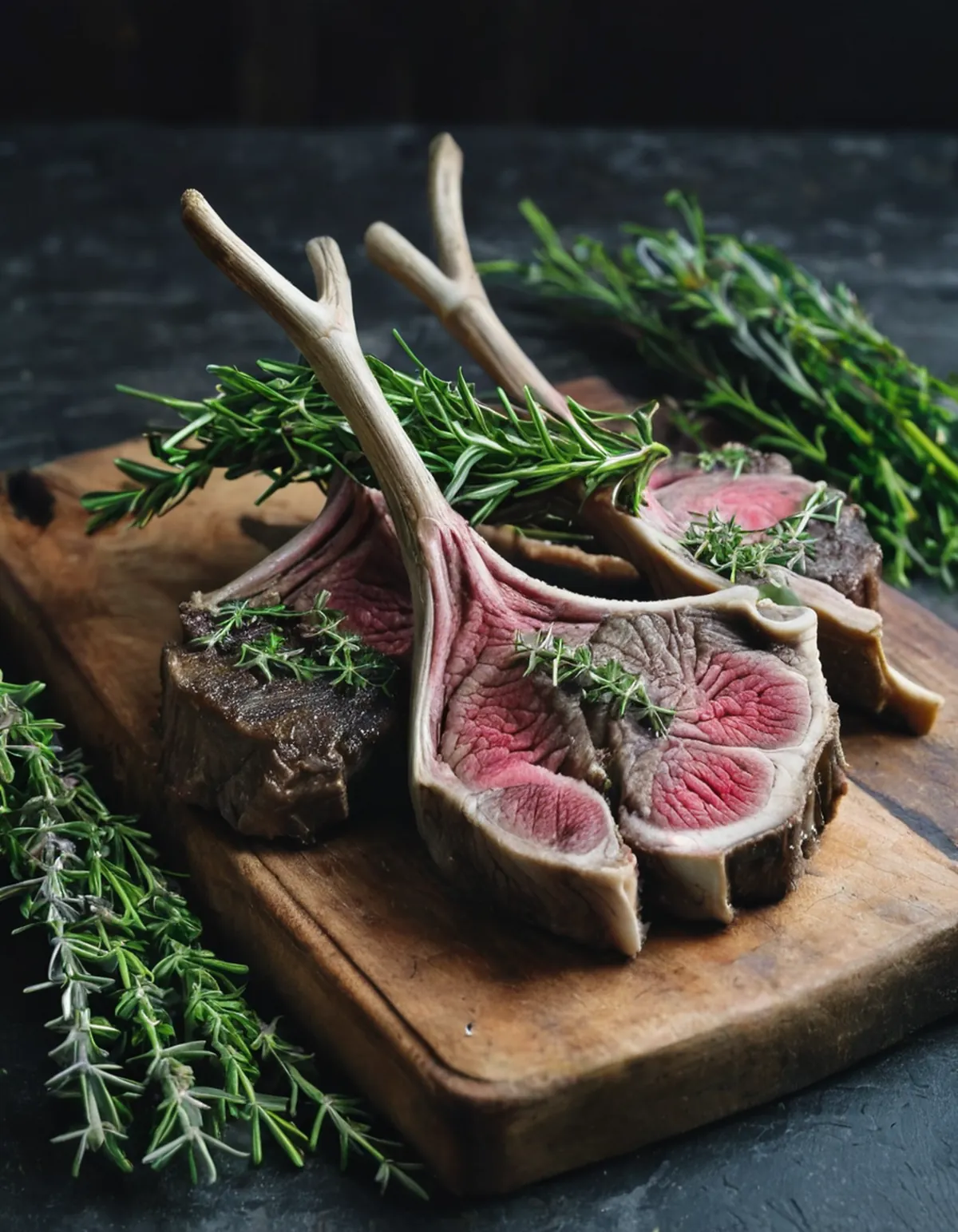
  • Cuts: legs, shoulders, racks, chops or diced lamb in vacuum packs or crates. Restaurants, hotels and caterers usually plan menus around specific cuts and need consistent portion sizes.
  • Offal: liver, heart and other offal are popular during the festival but have a shorter shelf life. Order them separately and check availability, as they are not always included with carcasses.

A mixed order is common: whole lambs for pre-ordered family orders, plus cuts for the counter and for food service. State the split clearly in your inquiry, because carcasses and cuts are often planned and packed separately.

How do you specify carcass weight when you buy whole lamb halal?

Give a carcass weight range per lamb rather than a single figure, and describe how the carcass is presented, for example with or without head and offal, whole or split. The weight basis and invoicing method are confirmed in the offer.

Lambs are natural products, and no two carcasses weigh the same. A clear specification avoids disputes when the delivery arrives.

  • Weight range: state a minimum and maximum carcass weight per lamb. A narrow range gives more uniform carcasses but can limit availability in peak weeks.
  • Presentation: with or without head, with or without offal (pluck), kidney fat on or off, whole or split into halves.
  • Age category: your customers may expect young lamb rather than older sheep; say so, because it affects size, taste and price.
  • Packaging: hung, wrapped in stockinette or film, or in boxes for transport.
  • Invoicing: by actual weight per carcass or per lot; agree how the weight is recorded.
  • Labelling: sheep meat must show the country of rearing and of slaughter under Regulation (EU) No 1337/2013, and each lot needs its halal certificate.

If your customers order a lamb "for the family", translate their wishes into these points before you send the inquiry. That is easier than explaining afterwards why a carcass is heavier or lighter than expected.

Fresh or frozen halal lamb for Eid al-Adha?

Chilled lamb suits counters and customers who expect fresh meat on the festival day; frozen lamb lets you buy earlier, spread deliveries and reduce the risk of shortages. Both must keep an unbroken cold chain and correct labelling.

Many shops use both. Chilled carcasses go to the families who pre-ordered, while frozen cuts cover restaurants, catering and extra demand in the days after the festival.

  • Chilled: Regulation (EC) No 853/2004 requires meat to be kept at no more than 7 °C and offal at no more than 3 °C. Shelf life is limited, so deliveries must be timed close to the festival.
  • Frozen: can be bought weeks ahead, when availability is often better. You need enough freezer capacity and time to thaw safely in the cold room.
  • Labelling: under Regulation (EU) No 1169/2011, frozen meat must show the date of freezing, and meat sold after thawing must be labelled as defrosted.

Tell your own customers in advance which option they receive. A family that ordered a fresh lamb should not be surprised by frozen meat, and a restaurant should know whether it has to plan thawing time.

Read the full text on EUR-Lex (Regulation 1169/2011).

How much cold storage does a butcher shop need for Eid lamb?

Plan backwards from the busiest day: count how many carcasses you can hang and how many crates you can store without blocking air circulation, then order and schedule deliveries to match. If capacity is short, split deliveries or add frozen stock.

Cold storage is the bottleneck that most often limits sales at Eid, not the supply of lambs. Check your capacity before you accept pre-orders from customers.

  • Rail space: whole carcasses are hung, not stacked. Count the hooks and rail length you actually have free during the festival week.
  • Air circulation: an overloaded cold room cools poorly. Leave space between carcasses and crates and keep doors closed as much as possible.
  • Separation: keep offal, cut meat and carcasses apart, and give the halal goods a clearly marked area.
  • Temperature checks: record temperatures more often in peak days, when doors open constantly.
  • Pick-up slots: give customers fixed collection times so meat leaves the cold room in a steady flow.
  • Second delivery: where possible, split the order into two or more deliveries instead of one large one.

If your own capacity is not enough, ask early whether delivery can be split or whether part of the volume can come frozen. A smaller, well-chilled order is worth more than a larger one you cannot store safely.

Ramadan halal meat wholesale: what changes for restaurants and caterers?

During Ramadan, demand concentrates on the evening meal (iftar) and shifts towards lamb, beef, poultry and minced meat for traditional dishes. Plan the whole month with regular deliveries instead of one large order.

Ramadan lasts about a month, so it is less a single peak than a period of higher, steady demand, often rising again towards Eid al-Fitr at the end of the month.

  • Restaurants: iftar menus and set menus increase the need for lamb shoulder, diced lamb, minced meat and chicken. Plan quantities per week based on reservations and last year's figures.
  • Caterers: community iftars and events require larger volumes on specific days; confirm those dates early.
  • Butchers and shops: customers buy more in the evening hours and at weekends; adjust staffing and the cold room accordingly.
  • Consistency: customers notice when a product or certificate changes during the month. Agree on one standard for the whole period.

A framework order for the month with weekly call-offs often works better than repeated spot orders. Ask whether this is possible and how quantities can be adjusted. Price, origin and delivery days are set out in the offer for each period.

Last updated: October 2026This page provides general information on the meat trade, halal practice and EU food law. It is not legal, tax or religious advice. The binding information for each lot is given in its offer, on its label and in its accompanying documents.

FAQ

Frequently asked questions

How early should I order halal lamb for Eid?

As early as possible, ideally several weeks before the expected date, because many markets order at the same time. The actual lead time depends on season, availability and transport and is stated in the offer.

When are Eid al-Adha and Ramadan this year?

Both follow the Islamic lunar calendar and move about 11 days earlier each year, and the exact day often depends on the moon sighting. Plan with a date window and confirm the final date with your community.

Can I buy whole lamb halal as a business from Carne Andalucía?

Yes, we supply trade buyers such as butchers, wholesalers, restaurants, hotels and caterers; we do not sell to private customers. You will find the range on our page for halal lamb wholesale.

What does a whole halal lamb cost?

The price depends on carcass weight, age category, presentation, fresh or frozen, quantity, origin, certificate standard, delivery destination and the time of year. You receive a concrete price with each offer.

Does wholesale halal lamb for Eid count as an udhiyah or qurbani?

Buying lamb meat from a wholesaler is not in itself an udhiyah, which has its own religious conditions such as time, intention and who slaughters. Please ask your imam or community whether and how a specific arrangement fulfils it.

Can we slaughter lambs at our shop for Eid al-Adha?

No. In the EU, slaughter for Eid must take place in an approved slaughterhouse (Regulation (EC) No 1099/2009, Article 4(4)), and businesses may only sell meat from approved establishments.

Is frozen halal lamb an option for Eid al-Adha?

Yes, frozen lamb lets you buy earlier and spread deliveries, provided you have freezer space and time to thaw safely. Our guide on storing halal meat explains the basics.

Which halal certificate comes with Eid al-Adha lamb?

Each lot comes with the halal certificate of the certification body named in the offer. If your customers expect a specific standard, state it in your inquiry; our guide to halal certificates lists the points to check.

Where can butchers buy halal meat wholesale for Eid?

From a halal meat wholesaler that sources from EU-approved slaughterhouses and cutting plants with a halal certificate. Check the approval number, the certificate for each lot and a lead time confirmed in writing before the festival.

How do I place a pre-order for halal lamb for Eid?

Send us your specification with quantities, carcass weight range, fresh or frozen, delivery address and preferred delivery days via the inquiry form. We reply with an offer that confirms availability, price and lead time.

Contact

Request an offer

Tell us which species and cuts, fresh or frozen, approximate quantities, the destination and the halal standard you need. We reply personally with questions or a written offer.

Request an offer
Request an offer