CARNE ANDALUCÍAHALAL MEAT · MÁLAGA
Request an offer
ProductsWholesaleHotels & cateringHalal & qualityGuidesFAQAboutContactHalal beefHalal lambHalal vealHalal poultryFrozen halal meatMinced & processedRequest an offer
ENESDE
  1. Home
  2. Guides
  3. Halal meat vs regular meat: what differs and what is the same
Guides · Halal · 6 min read

Halal meat vs regular meat: what differs and what is the same

How halal meat differs from conventional meat in slaughter, certification and labelling, how the stunning debate is framed, what EU law treats identically and why halal status says nothing about nutrition or quality.

In brief

Halal and conventional meat differ in the slaughter, the certification and the separation from non-halal products.

EU hygiene law, official controls, temperatures, origin labelling and traceability are the same for both.

Halal status is not a health or quality claim; quality depends on breed, age, feeding, handling and cold chain.

What is the difference between halal and regular meat?

Halal meat comes from a permitted species, slaughtered according to the Islamic rite and kept apart from non-halal products, with a certifying body checking these steps. Regular, or conventional, meat has none of these religious requirements but is subject to the same food law.

Halal and conventional meat compared
AspectHalal meatConventional meat
SpeciesPermitted species only; pig excludedAll species approved for food
SlaughterAccording to the rite of the applied standardAccording to EU and national rules
StunningDepends on the standard and national lawRequired under Regulation (EC) No 1099/2009
CertificationBy a halal certifying bodyNone required
SeparationKept apart from non-halal productsNo religious separation required
Hygiene, controls, labellingEU food lawEU food law

The decisive point for a buyer is that “halal” is not a different kind of meat. It is ordinary beef, lamb, veal or poultry for which additional requirements were met and documented. What those requirements are in detail depends on the standard of the certifying body, which is why the certificate matters more than the word on the label.

What halal means in religious terms is explained in our guide what halal meat means.
How is halal meat produced and processed?

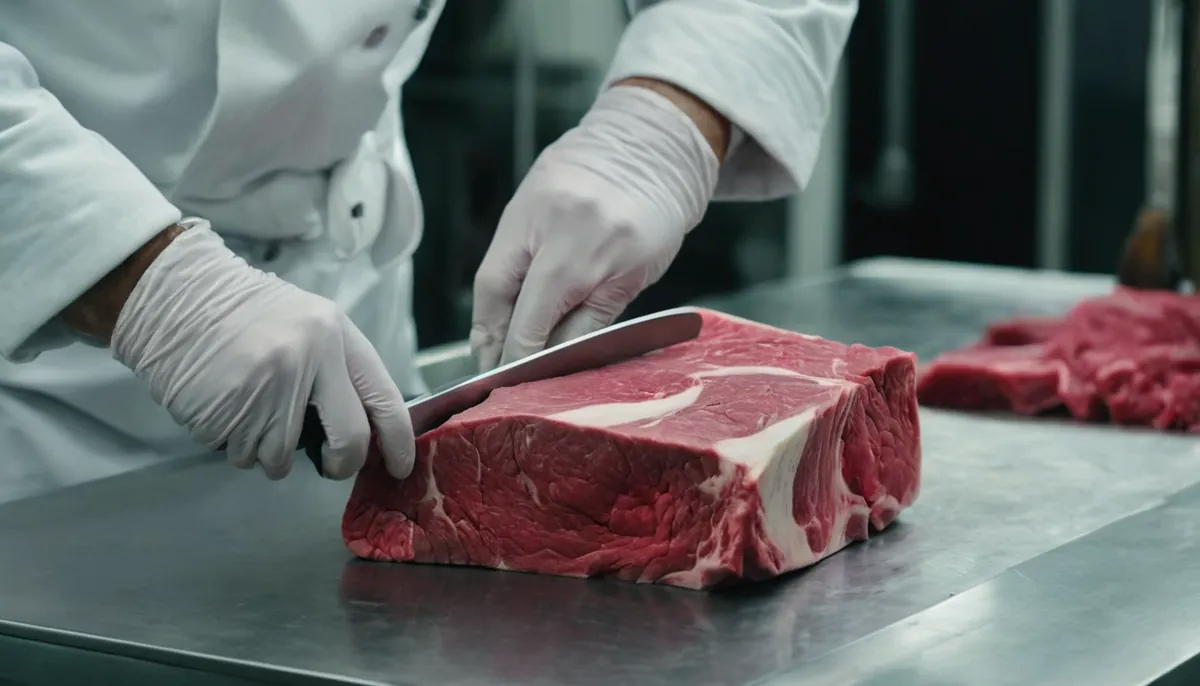
Halal meat is produced in the same kind of approved slaughterhouses and cutting plants as other meat. The difference is the slaughter according to the halal rite and, afterwards, the separation from non-halal products in cutting, packing, storage and transport.

Halal meat processing follows the same steps as conventional meat production:

  1. Ante-mortem inspection: the official veterinarian inspects the animals before slaughter.
  2. Slaughter: the animal is slaughtered according to the rite of the applied standard, typically by a Muslim slaughterer who invokes the name of God, with a cut that lets the blood drain.
  3. Post-mortem inspection: the carcass is inspected and, if fit, receives the health mark.
  4. Chilling, cutting and packing: under EU hygiene law, with halal products kept apart from non-halal products.
  5. Storage and transport: in the cold chain, with labels and documents that keep the halal status traceable.

The certifying body audits the steps that matter for halal status and decides whether a plant or a lot may be certified. Official veterinary controls under Regulation (EU) 2017/625 take place regardless of halal certification and cannot be replaced by it. The slaughter itself is described in detail in our guide halal slaughter explained.

Is stunning used in halal slaughter?

It depends on the standard and on national law. Some halal standards accept reversible stunning before the cut, others accept only slaughter without stunning. EU law requires stunning but allows an exemption for religious slaughter in slaughterhouses.

Article 4(4) of Regulation (EC) No 1099/2009 allows animals to be slaughtered without prior stunning when this is prescribed by religious rites and carried out in a slaughterhouse. Member States may adopt stricter national rules, so whether non-stunned slaughter takes place depends on the country of slaughter.

The question is the subject of a public debate, which we describe without taking sides:

  • animal welfare organisations and many veterinarians argue that stunning reduces avoidable suffering and should always be required;
  • many religious authorities hold that the animal must be alive and uninjured at the moment of the cut; some of them accept reversible stunning on this basis, others do not.

For a buyer, this is a question of specification. If your customers expect meat from stunned or from non-stunned animals, say so in the enquiry. Each of our offers states which slaughter method applies to the lot, and the certificate shows the standard behind it.

How are halal and conventional meat labelled?

EU law does not require the slaughter method to be shown on the label. A halal claim is voluntary, but like any food information it must not be misleading and must be backed by evidence, in practice a certificate.

Article 7 of Regulation (EU) No 1169/2011 prohibits misleading food information. A supplier who labels meat as halal must be able to substantiate this, and the usual evidence is the certificate of a certifying body. Many certifying bodies also license their own logo for use on packs.

All other labelling elements are identical for halal and conventional meat:

  • the identification mark with the approval number of the establishment;
  • the origin information under Regulation (EC) No 1760/2000 for beef and veal and under Implementing Regulation (EU) No 1337/2013 for sheep, goat and poultry meat;
  • the use-by or best-before date and storage conditions;
  • for meat preparations and products, the list of ingredients with allergens emphasised.

A halal logo on a pack is therefore not a replacement for the certificate. Ask for the certificate that covers the establishment and the products, and check that the identification mark on the pack matches the establishment it names.

What stays the same for halal and conventional meat?

Everything that EU food law regulates: hygiene, the approval of establishments, official controls, temperatures, traceability and origin labelling. Halal certification adds requirements, but does not remove or relax any of them.

  • Hygiene: Regulations (EC) No 852/2004 and No 853/2004 apply in full.
  • Approval: slaughterhouses and cutting plants need an EU approval and an approval number.
  • Official controls: ante- and post-mortem inspection and controls under Regulation (EU) 2017/625.
  • Temperatures: fresh meat of cattle, sheep and goats at no more than 7 °C, poultry meat at 4 °C, minced meat at 2 °C, frozen meat at −18 °C or colder.
  • Traceability: one step back, one step forward under Article 18 of Regulation (EC) No 178/2002.
  • Origin labelling: the same rules for beef, veal, lamb and poultry.

This is why a halal certificate never replaces the commercial documents, the identification mark or the cold chain records. A buyer of halal meat needs both: the evidence that EU law was met, and the evidence that the halal standard was met. How to read the halal part is explained in our guide checking halal certificates.

What are the benefits of halal meat: is it healthier or better quality?

Halal status is a religious and documentary requirement, not a health or quality claim. There is no recognised basis for saying that halal meat is healthier than conventional meat, and we make no such claim.

In the EU, nutrition and health claims on food are regulated by Regulation (EC) No 1924/2006 and are only allowed if they have been authorised. “Halal” is not such a claim, and suggesting that halal meat is healthier because of the slaughter method would not be backed by EU law.

The quality of a piece of meat depends on factors that are the same for halal and conventional meat:

  • breed, age and sex of the animal;
  • feeding and rearing;
  • handling before and after slaughter;
  • cutting, trimming and, for beef, ageing;
  • packaging and an unbroken cold chain.

For halal buyers, the real benefit is a different one: certainty that the meat meets the standard their customers expect. That certainty comes from a certificate that matches the establishment and the lot, and from documents that link the delivered goods to both. Quality requirements belong in the specification, for halal and conventional meat alike.

Last updated: October 2026This page provides general information on the meat trade, halal practice and EU food law. It is not legal, tax or religious advice. The binding information for each lot is given in its offer, on its label and in its accompanying documents.

FAQ

Frequently asked questions

Is halal beef different from regular beef?

Halal beef comes from the same cattle breeds and is subject to the same EU rules as regular beef. The difference is the slaughter, the certification and the separation from non-halal products; tenderness and flavour depend on breed, age, feeding and ageing.

Does halal meat taste different?

There is no taste difference that can be attributed to halal status as such. Flavour and texture depend on the animal, the cut, the ageing and the handling of the meat.

Is halal meat more expensive than conventional meat?

There is no fixed price difference. Prices depend on species, cut, origin, quantity and market situation; certification and separation can add costs, and every offer states the actual price.

Can non-Muslims eat halal meat?

Yes. Halal meat is meat that complies with EU food law like any other meat, with additional religious requirements met. Whether someone chooses to eat it is a personal decision.

Is meat halal just because the species is permitted?

No. A permitted species is necessary, but the animal must also have been slaughtered and handled according to a halal standard. Only a certificate shows this for a specific lot.

What is the difference between halal and kosher meat?

Both are religious dietary rules with their own slaughter requirements, but they are not interchangeable. Kosher slaughter (shechita) is performed by a trained Jewish slaughterer, and kosher rules also cover which parts may be eaten and the separation of meat and dairy; halal slaughter follows Islamic rules under the standard of a halal certifying body. Meat certified as one is not automatically accepted as the other.

Contact

Request an offer

Tell us which species and cuts, fresh or frozen, approximate quantities, the destination and the halal standard you need. We reply personally with questions or a written offer.

Request an offer
Request an offer