CARNE ANDALUCÍAHALAL MEAT · MÁLAGA
Request an offer
ProductsWholesaleHotels & cateringHalal & qualityGuidesFAQAboutContactHalal beefHalal lambHalal vealHalal poultryFrozen halal meatMinced & processedRequest an offer
ENESDE
  1. Home
  2. Guides
  3. Cold chain for meat: temperatures, transport and checks
Guides · Cold chain · 7 min read

Cold chain for meat: temperatures, transport and checks

The temperature limits EU hygiene law sets for chilled and frozen meat, how meat should be transported and handed over, what temperature loggers record and where the cold chain typically breaks.

In brief

EU limits: meat 7 °C, poultry 4 °C, minced meat 2 °C, meat preparations 4 °C; frozen −18 °C.

The cold chain is only as good as its weakest handover: loading, transit and goods-in.

Measure on arrival, record the result and refuse goods outside the agreed limits.

What temperatures apply to chilled and frozen meat?

Under Annex III of Regulation (EC) No 853/2004, chilled meat must be kept at no more than 7 °C, poultry meat at no more than 4 °C, minced meat at no more than 2 °C and meat preparations at no more than 4 °C. Quick-frozen food must be kept at −18 °C or colder.

Maximum temperatures for meat
ProductMaximum temperatureLegal basis
Fresh meat of cattle, sheep, goats (carcases, cuts)7 °CReg. (EC) 853/2004, Annex III, Section I
Poultry meat4 °CReg. (EC) 853/2004, Annex III, Section II
Minced meat, chilled2 °CReg. (EC) 853/2004, Annex III, Section V
Meat preparations, chilled4 °CReg. (EC) 853/2004, Annex III, Section V
Minced meat and meat preparations, frozen−18 °CReg. (EC) 853/2004, Annex III, Section V
Quick-frozen foods−18 °CDir. 89/108/EEC

These are upper limits, not targets. Many buyers specify lower temperatures in their contracts, especially for vacuum-packed meat with a long shelf life. The limits apply to the meat itself, so they refer to product temperature, not the air temperature in the trailer.

Sources: Regulation (EC) No 853/2004 (EUR-Lex) · Directive 89/108/EEC (EUR-Lex).
How should meat be transported?

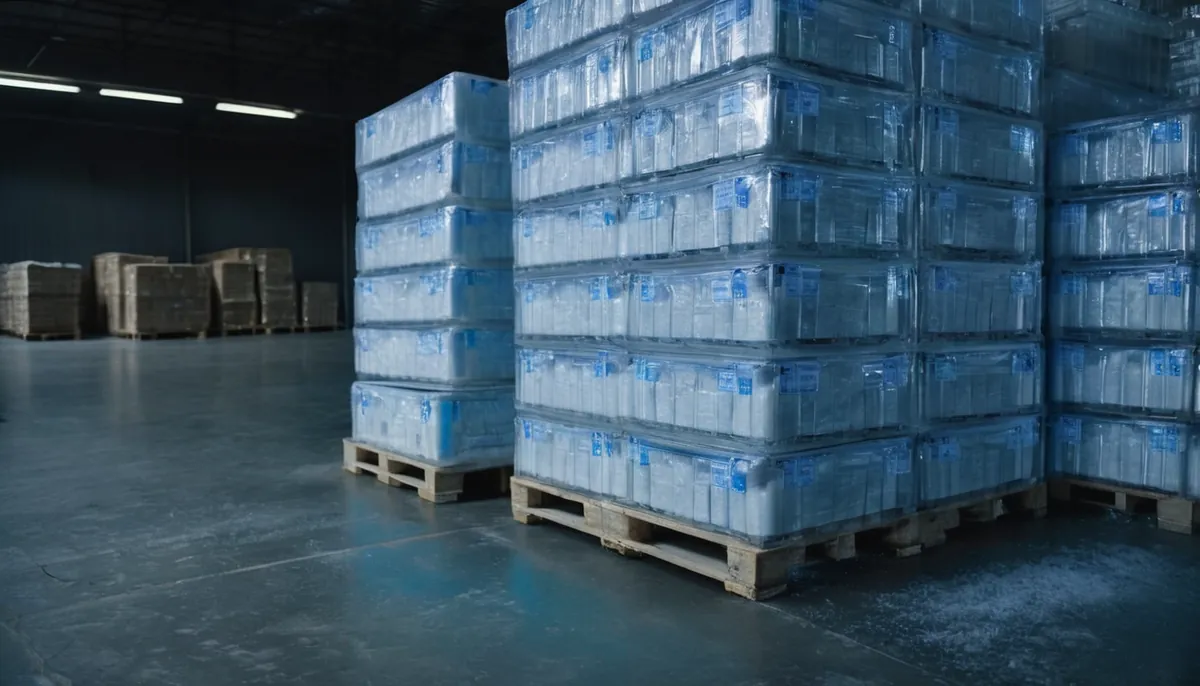
Meat must be transported in clean vehicles that maintain the required temperature throughout the journey. The temperature is set before loading, the meat is loaded already chilled or frozen, and chilled and frozen goods are not mixed without separate compartments.

EU hygiene law requires that meat reaches the specified temperature before transport and stays there during transport. In practice this means:

  • the vehicle is pre-cooled to the set temperature before loading;
  • loading happens quickly, ideally through a sealed dock, so that the doors are open as briefly as possible;
  • pallets are stacked so that cold air can circulate, without blocking the air ducts;
  • carcases and quarters are hung, unless they are packed;
  • chilled and frozen goods travel in separate compartments with separate temperature control;
  • packed and unpacked meat are kept apart, unless they are suitably separated.

For international road transport, refrigerated vehicles are usually certified under the UN ATP agreement on the international carriage of perishable foodstuffs. The ATP certificate says what the vehicle is capable of, not what temperature it actually kept on a given trip. That is the job of the temperature record.

Transport terms, carrier and temperature set points are agreed per order; see our wholesale page for how we organise deliveries.

What happens at the handover?

At handover, the receiver checks the temperature of the meat, the condition of the packaging, the labels and the documents before signing. Deviations are noted on the delivery note in the presence of the driver.

The handover is where responsibility passes from one party to the next, so it is also where problems must be documented. A practical goods-in routine:

  1. Check the vehicle’s temperature display and the record of the trip before opening the doors.
  2. Measure the product temperature with a calibrated probe thermometer, between packs or, if necessary, in the core of a sacrificial sample.
  3. Inspect packaging: no torn vacuum packs, no leaking blood, no crushed cartons, no frost or ice crystals on chilled goods.
  4. Compare labels with the delivery note: product, batch, durability date, approval number, quantity.
  5. Move the goods into cold storage immediately after checking.

Measure several packs from different positions in the load, especially near the doors, where temperatures rise first. Record the readings with the time and the name of the person who took them. A delivery note signed without reservation makes later complaints difficult.

What do temperature loggers record?

A temperature logger records the air temperature in the vehicle or the product temperature at set intervals throughout the journey. The record shows not only whether the meat arrived cold, but whether it stayed cold all the way.

A single reading on arrival can hide a problem: meat that warmed up during a long stop and was cooled again before delivery may look correct at the door. A continuous record makes such events visible.

For quick-frozen foods, Regulation (EC) No 37/2005 (EUR-Lex) requires means of transport, warehousing and storage to be fitted with suitable recording instruments to monitor air temperature, and the records to be kept. For chilled meat, there is no equivalent EU requirement, but temperature records are standard practice in the meat trade and are often required by buyers and certification schemes.

Points to agree with your supplier or carrier:

  • whether air or product temperature is recorded, and where the sensor sits;
  • the recording interval;
  • how you receive the record: printout, download or online access;
  • how long records are kept.

Ask for the record of any delivery where the arrival temperature is borderline, before accepting the goods.

Where does the cold chain typically break?

Most cold-chain failures happen during loading and unloading, at intermediate stops and in overfilled or poorly ventilated cold stores. The causes are usually organisational rather than technical.

Common cold-chain faults and how to prevent them
FaultConsequencePrevention
Pallets waiting on an unrefrigerated dockSurface warming, condensationLoad and unload directly; time limits for open doors
Vehicle not pre-cooledTemperature rise in the first hoursPre-cool to set point before loading
Doors opened at many stopsRepeated warming of the loadPlan routes, separate compartments, strip curtains
Blocked air circulationWarm spots inside the loadLeave gaps at walls and ceiling; do not cover air ducts
Chilled and frozen goods mixedChilled goods freeze or frozen goods thawSeparate compartments with own set points
Overfilled cold store at goods-inSlow cooling, warm corePlan capacity before delivery

A broken cold chain cannot be repaired by cooling the meat again. If the limits were exceeded, the meat must be assessed and, if necessary, rejected. This is why the limits, the measuring method and the consequences of a deviation should be agreed in writing before the first delivery.

What should be agreed with the supplier about the cold chain?

Agree the product temperature on dispatch and on arrival, the vehicle type, the maximum transit time, the temperature record and what happens if limits are exceeded. Put it in the offer or the framework agreement.

A short written cold-chain clause avoids most disputes. It should cover:

  • target and maximum product temperature for each product group;
  • who arranges transport and when risk passes, for example by reference to an Incoterm;
  • vehicle requirements, such as refrigerated vehicle, separate compartments, ATP certificate for cross-border transport;
  • the form of the temperature record and how it is handed over;
  • how temperature is measured at goods-in and by whom;
  • the procedure for deviations: notification, photographs, measured values, return or disposal.

The clause should be the same for every delivery under a framework agreement, so that drivers, warehouse staff and quality staff on both sides work to one set of values. Review it whenever products, routes or carriers change.

For the storage that follows delivery, see our guide on meat storage and shelf life. Cold-chain terms for each delivery are set out in our written offer.

Last updated: October 2026This page provides general information on the meat trade, halal practice and EU food law. It is not legal, tax or religious advice. The binding information for each lot is given in its offer, on its label and in its accompanying documents.

FAQ

Frequently asked questions

Is 7 °C the right storage temperature for chilled beef?

No, 7 °C is the legal maximum, not a recommended storage temperature. Most buyers store chilled meat well below it, often close to 0 °C, to extend shelf life.

Is the limit for poultry stricter than for red meat?

Yes. Poultry meat must be kept at no more than 4 °C, compared with 7 °C for fresh meat of cattle, sheep and goats. Minced meat is the strictest chilled category at 2 °C.

Should I measure air or product temperature?

Legal limits refer to the temperature of the meat. Air temperature in the vehicle is a useful indicator, but on arrival you should measure the product with a calibrated thermometer.

Can I refuse a delivery that is too warm?

Yes, if the temperature exceeds the legal limit or the agreed limit. Note the measured values on the delivery note in the driver’s presence and inform the supplier immediately.

Can frozen and chilled meat travel on the same truck?

Yes, if the vehicle has separate compartments with their own temperature control. Mixing them in one compartment is not suitable.

Contact

Request an offer

Tell us which species and cuts, fresh or frozen, approximate quantities, the destination and the halal standard you need. We reply personally with questions or a written offer.

Request an offer
Request an offer